Nuttall
Meet the Designer - Robyn Taylor, Design Engineer
Robyn hasn’t travelled far to begin her career, either in miles or in years. Raised in local village, Kinver, and recently graduating with a First in Product Design, her transition from student to Design Engineer at Nuttall has been swift and transformative.
In this interview, Robyn reflects on the shift from academic design to commercial reality, what she’s learned in her first months as a Design Engineer, and why pushing beyond your comfort zone matters more than getting everything right first time.
The journey so far
Q. How does your experience of working at Nuttall so far compare with what you imagined work culture might be like when you were at university?
Robyn: It’s completely different to university. Instead of short-term deadlines and grades, you’re working towards longer-term goals as part of a wider team. There’s a strong cross-departmental culture and a real sense of support.
Starting out can feel daunting without work experience, but pushing yourself and adapting is key. I’ve been lucky to work with the four guys in the drawing office. Their experience and support have been invaluable.
Q. Before you started, what did you expect the role of a Design Engineer to involve, and how has the reality been similar or different so far?
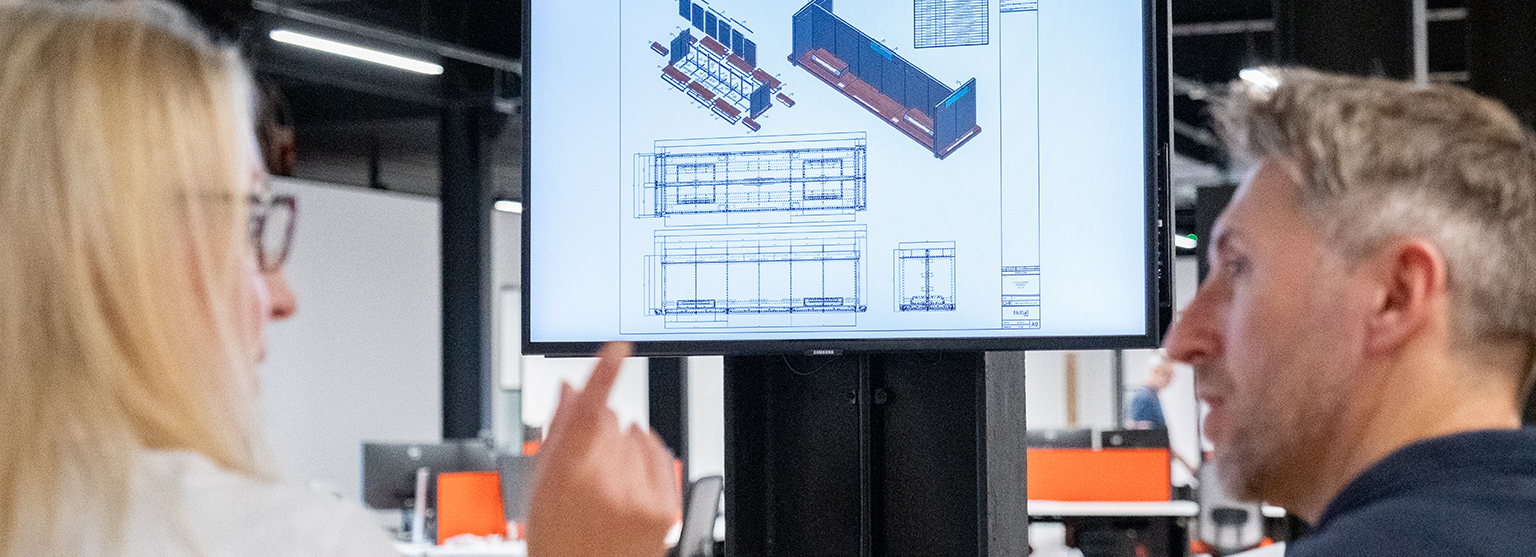
Robyn: I expected a more traditional CAD role, but it’s much more hands-on and fast-paced. Working with the shop floor has shown me how creative shopfitting can be.
I set high expectations for myself and want to keep learning. Retail design isn’t something I’d been exposed to before, so it’s been eye-opening.
Q. Can you talk us through a project you’ve worked on recently, from brief to prototype, and share a key thing you learned along the way?
Robyn: One of my first projects was designing a vape display unit for petrol stations. It was my first project from scratch and I’d only been at Nuttall for a month, so it was daunting.
The project involved screens, electronics and very fine tolerances where small inaccuracies mattered. The biggest learning was the importance of clear communication and being open to feedback.
Design & prototyping: thinking through making
Q. When you’re given a brief, how does that process compare with what you were used to during your studies, and what support has helped you find your feet if it’s been different?
Robyn: University projects were long and self-directed, covering everything from briefing to research, CAD and prototyping.
Here, projects are large but roles are clear. My focus is on making designs manufacturable, which keeps everything moving smoothly.
Q. How has using SolidWorks on real customer projects at Nuttall compared with using it in a more theoretical way at university?
Robyn: At university it was about pushing the software to its limits. Here, it’s the opposite. You need to keep things simple, lightweight and easy for others to use and adapt.
Designs are often shared across the team, so there’s a strong sense of best practice. Efficiency matters much more than showing what the software can do.
Q. Is there a creative solution you’ve worked on that you’ve been particularly proud of, and what made it stand out for you?
Robyn: I worked on a printer unit redesign with a sliding top drawer with very specific drawer runners that we had to work around.
Getting everything to fit together perfectly, down to the exact measurements, was really satisfying. When the cutting list went out and the team were happy with it, that felt like a real win.
Managing change and working with others
Q. Design often involves change and refinement. How do you approach feedback and revisions as part of your role?
Robyn: At the start, I struggled with feedback. I had to remind myself how little I knew on my first day. In just four months I’ve learned so much but getting there meant taking feedback on the chin and building resilience. Now I actively seek feedback because I know it helps me improve.
Q. How do you usually communicate design changes with colleagues in other teams, and what helps those conversations run smoothly?
Robyn: We talk. A lot. The Creative Concept Centre really helps because the open space encourages open conversations. We keep the mood light, stay honest and communicate clearly. That’s important not just for the job, but for building relationships too.
Growing and looking ahead
Q. What’s something new you’ve learned since starting at Nuttall that’s really stuck with you?
Robyn: I’ve learned that growth comes from stepping outside your comfort zone, sometimes just by asking a question.
The people you work with really matter, and the humour here makes a difference. I’ve learned it’s okay to fail and that progress isn’t linear.
Manufacturing needs precision, but there’s an understanding that we’re human.
Q. As you think about the year ahead, what skills or experiences are you most excited to continue developing?
Robyn: I want to learn more about manufacturing, fitting and materials. A lot of that comes with experience. I’m also really interested in the part numbering system. It’s methodical and process-driven, which appeals to me.
Spending time on the shop floor and visiting each department was invaluable and I’d love to do more of that.
Rendering and presentation is another area I’d like to develop.
Q. What advice would you give to the next graduate joining Nuttall in a similar role?
Robyn: Be confident in the application process and be yourself. That’s the best way to sell yourself.
Push yourself out of your comfort zone and don’t be afraid to fail. It’s very different to university where failure feels black and white. Here, mistakes are part of learning. Use the people around you for knowledge. There are a lot of good people here, and hopefully the same can be said for other businesses too.
Reflection and culture
Q. What aspect of working at Nuttall, whether it’s the people, tools or projects, has helped you feel most supported as you learn?
Robyn: From HR to the shop floor, to my immediate team… everyone is lovely. You might have design frustrations or challenges, but it’s never personal. There’s always support, and that makes a huge difference.
You come for the manufacturing and the job, but you stay for the people.
Related Content
Curious how Nuttall’s makers, designers and engineers turn craft into innovation?
Discover Prism, our full end-to-end service that brings everything in-house – from design and UK-based manufacturing to project management and installation.
Explore our Creative Concept Centre where collaboration, creativity and British manufacturing expertise come together.