Nuttall
Meet the Implementer - Neil Mason, Project Manager
From retail shop floors to large-scale installations, Neil Mason’s journey into project management has been built on practical experience and people-first thinking.
With over a decade at Nuttall, Neil brings together operational discipline, manufacturing insight and a calm, honest approach to delivery. In this interview, he reflects on how his background shaped his mindset, the realities of managing complex rollouts, and why clarity, communication and trust are at the heart of every successful project.
Background and career journey
Q. How did you first find your way into project management in this industry?
Neil: I started out in retail, working my way up to store manager roles with Currys, Aldi, Tesco and Asda. That gave me a strong grounding in operations and people management.
From there, I moved into manufacturing, running an acrylic department, which introduced me to the production side of the business. Over time, that naturally led into project management, bringing together everything I’d learned across both retail and manufacturing.
Earlier in my career, I also spent time on installations, driving vans and working on site, which gave me a practical understanding of how things come together in the real world. That’s something I still draw on today.
I’ve now been at Nuttall for 11 years. It’s the people that make it. Working close to home, with a good team around you, makes a big difference.
Q. What experiences earlier in your career shaped how you work today?
Neil: Retail taught me how to deal with pressure, people and constant change. Moving into manufacturing then gave me a real appreciation for detail and process.
One of the biggest influences was my time at Aldi. It showed me how simple things can be. Products come in the back door and need to get out the front door, with as few touchpoints as possible.
That mindset has stayed with me. Keep it simple, plan properly, get things done. It sounds obvious, but it makes a big difference when things get busy.
The PM role and its responsibilities
Q. What does a Project Manager at Nuttall do?
Neil: It’s about joining the dots across the whole project. From the initial brief through to installation, I make sure everything runs smoothly, people stay aligned and we deliver what the client expects.
Typically, I’ll take a brief and run it through to completion. For me, it’s all about planning and honesty. I don’t like surprises, so I focus on staying ahead of things and making sure nothing catches the team off guard.
Q. What do you look for at the start of a project?
Neil: Clarity. Understanding exactly what the client wants, the timelines and any potential challenges from the outset.
Email can sometimes create disconnects, especially with third parties involved, so clear communication is key. If everyone is aligned early on, you avoid issues with cost, scope or delivery later down the line.
It’s about getting everyone on the same page as quickly as possible, without slowing things down.
Q. When does a project become most complex?
Neil: Usually when it moves from design into manufacturing and installation. That’s when everything becomes more detailed and time-critical, so it’s about keeping control of the finer details and making sure everyone is working from the same information.
Managing complexity and delivery
Q. How do you keep large rollouts aligned?
Neil: It comes down to planning and communication. Staying structured, keeping in touch with everyone involved and trying to stay one step ahead.
There’s always an element of the unknown, whether that’s site conditions or something unexpected during installation. That’s where having a good team really matters. Fitters, for example, can solve problems quickly on site and help turn potential issues into solutions.
You also have to adapt to each client. Some want you hands-on and present, others prefer a lighter touch. Often it makes sense to be there for the first one or two rollouts, then step back once everything is running smoothly.
Building that relationship early creates trust, which makes everything, including the difficult moments, much easier to manage.
Q. How important is understanding both creative and practical sides?
Neil: It’s essential. You need to understand what the client is trying to achieve visually, but also what’s realistic from a build and installation point of view.
That balance helps avoid issues and keeps projects moving in the right direction.
Q. How do you adapt to different clients?
Neil: I keep things simple and adjust to how they like to work. Some want detail and regular updates, others don’t.
Honesty is key. If something isn’t quite right, it’s not about saying no, it’s about offering a solution. Whether it’s cost, quality or practicality, we’ll always take it as far as we can.
There’s an education piece there too. We aren’t just being proactive, we’re helping clients understand why decisions are being made and how we can approach things better next time.
I believe we have a duty to help clients understand how our world works, so things run more smoothly in the future.
Collaboration and problem-solving
Q. How does working with the Creative Concept Centre help?
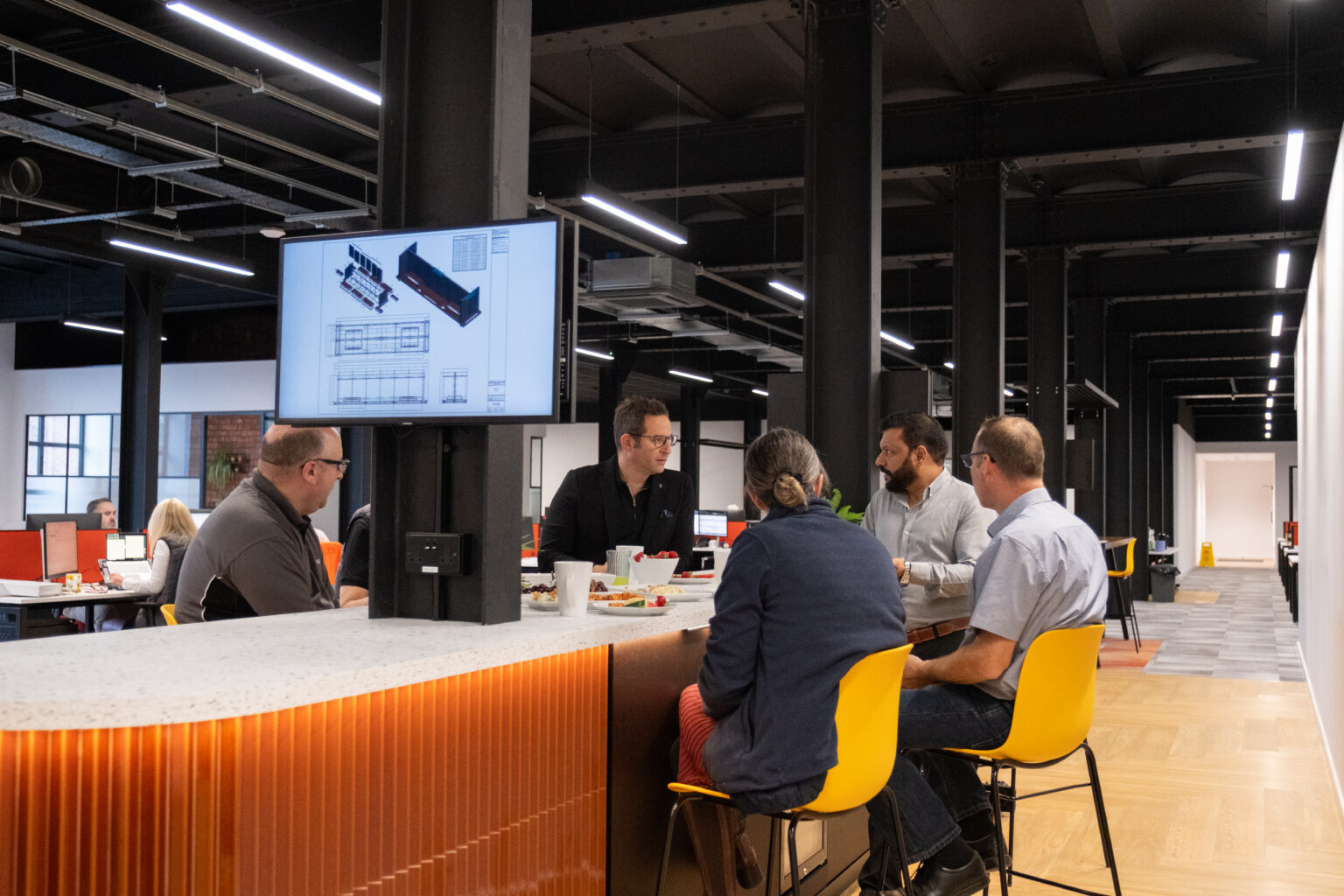
Neil: It’s made collaboration much more immediate. Instead of waiting on emails, we can review ideas, materials and prototypes in real time.
That helps us reach decisions quicker, iron out issues earlier and keep projects moving efficiently. It’s a big step forward in how we communicate as a business and removes a lot of unnecessary delays.
Q. Can you share an example of a challenge you’ve overcome?
Neil: On a recent project, we had a unit that wouldn’t fit on site. We quickly adapted the design into smaller sections that could be installed in place.
It came down to teamwork, communication and being present during installation. Managing the customer, the fitters and the wider team all at once meant keeping everyone informed and aligned at every step.
There was a lot of problem-solving involved, but when everyone works together, solutions come quickly.
The goal is always the same. Deliver a result where the end user would never know there was a challenge in the first place.
Outcomes and impact
Q. What’s the most rewarding moment in a project?
Neil: For me it’s seeing the finished install or doing that final walkthrough. Walking into a completed space after everything that’s gone on behind the scenes is always a great feeling, especially if the client is there with you and they’re making all the right noises.
We’ve just been through this with Harvey Norman. When the client is happy and recommending us to anyone that will listen, that’s when you know it’s been worth it. It reflects the effort of the whole team.
Q. Is there a project that stands out?
Neil: Again, a great example is our recent Harvey Norman rollout. The first store went smoothly, the second had more challenges, but we worked through them.
The level of trust built with the client throughout the first store meant they were confident in the outcome of the second without needing to question every detail.
The collective mindset was simple, we will get there. It wasn’t perfect, but it was a project where challenges were handled positively and turned into strong outcomes.
Personal perspective
Q. What drives you outside of work?
Neil: I enjoy pushing myself physically. I’ve climbed Kilimanjaro and completed Everest Base Camp, which were both big personal achievements.
I’ve always enjoyed being outdoors, which started early on and has stayed with me. I’m into mountain biking and trekking, and I spend as much time outside as I can.
That mindset of setting goals and pushing through challenges definitely carries over into work.
Time with family is important too. Recently, my daughter and I climbed the Three Peaks together. Moments like that stay with you.
Related Content
Curious how Nuttall’s makers, designers and engineers turn craft into innovation?
Discover Prism, our full end-to-end service that brings everything in-house – from design and UK-based manufacturing to project management and installation.
Explore our Creative Concept Centre where collaboration, creativity and British manufacturing expertise come together.